A private landlord has been fined after a council investigation found serious hazards at an HMO, including fire safety failings, electrical risks, damp and disrepair. The case is a timely reminder that HMO management is not just about having the right paperwork on file. The condition of the building, the way risks are monitored and the speed of response when tenants raise concerns can all become central if enforcement action follows.
Property Industry Eye reports that Anita Sharma pleaded guilty to seven offences under the Management of Houses in Multiple Occupation (England) Regulations 2006 after an investigation by City of Lincoln Council. The landlord was fined GBP4,000 and ordered to pay GBP2,000 towards the council’s costs, plus an GBP800 victim surcharge.
The investigation began after tenants at the Tempest Street property raised concerns and Lincolnshire Fire and Rescue identified immediate fire safety risks during a visit in January 2025. Council officers later found a range of hazards, and an Emergency Prohibition Order was served because of the imminent risk to occupants.
Why the case matters
For landlords, the important point is not the size of the fine alone. It is the combination of risks that led to formal action: fire safety concerns, electrical hazards, damp and wider disrepair. Those are the kinds of issues that can quickly move from routine maintenance into housing standards enforcement, especially where tenants have already complained or another authority has flagged immediate risks.
HMOs are particularly exposed because several households may be relying on shared escape routes, shared facilities and common electrical or heating systems. A defect in a hallway, kitchen, stairwell or shared bathroom can affect multiple residents at once. That makes inspection routines, repair records and follow-up checks especially important.
This also fits a wider enforcement pattern. Recent local authority cases, including the Rotherham landlord fine over property safety failures, show how quickly problems with alarms, electrical safety, heating, pests, damp or licensing can become evidence in a formal case. Landlords do not need to wait for a complaint before reviewing whether their records and property checks are strong enough.
What landlords should check now
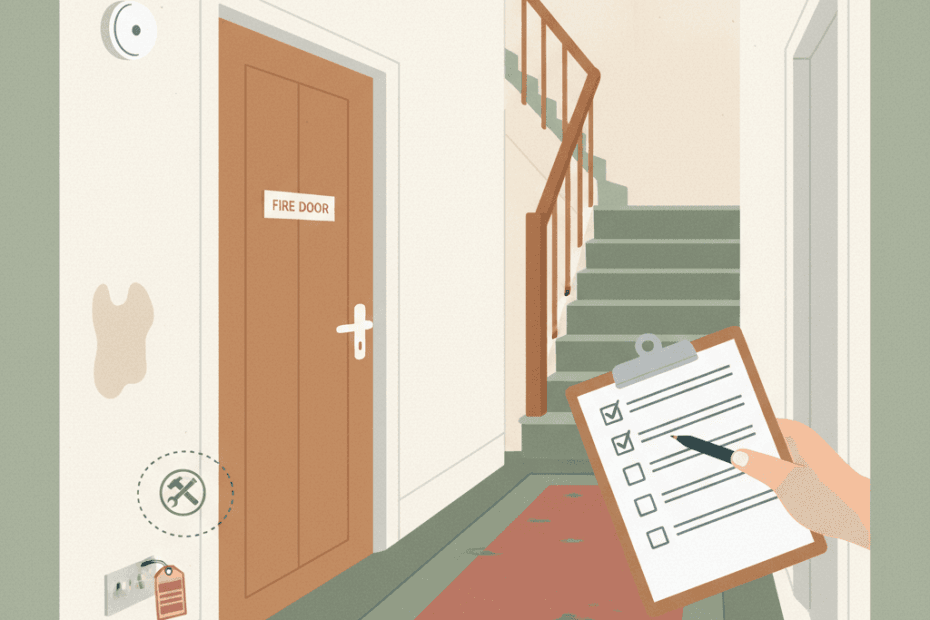
The first practical check is fire safety. In an HMO, escape routes should be clear, fire doors should close properly, alarms should be working and any emergency lighting or detection system should be maintained in line with the property’s requirements. It is worth keeping dated records of tests, contractor visits and any action taken after a fault is found.
Electrical safety is another area to review. Landlords should know when the last electrical inspection was carried out, what remedial work was recommended, whether it was completed and where the evidence is stored. In shared accommodation, tenants may also report overloaded sockets, damaged fittings or unsafe appliance use. Those reports should be logged and followed up rather than treated as informal comments.
Damp and disrepair need the same discipline. A stain, leak, failed extractor fan or recurring condensation issue can become more serious if it is not investigated and documented. Here4 Landlords has previously covered what landlords should check after refreshed damp and mould guidance, and the same principles apply in an HMO: identify the cause, record the response, complete repairs promptly and check whether the problem has returned.
Do not overlook tenant reports
One detail in the Lincoln case is especially relevant for managing agents and self-managing landlords: the investigation followed tenant concerns. A tenant report can become the start of an evidence trail. If the response is slow, vague or undocumented, it may be harder to show that the landlord took the issue seriously.
A simple system can help. Log the date of the report, the specific issue, any photos or messages received, the inspection outcome, the contractor instructed, the completion date and any follow-up visit. That record is useful even where the original report turns out to be minor, because it shows the landlord had a process rather than relying on memory.
Landlords should also be careful where someone else manages the property day to day. If an agent, family member or contractor is dealing with tenant contact, the property owner still needs enough visibility to know whether urgent hazards are being handled properly. In the reported case, a second individual acting on behalf of the landlord accepted a caution for an offence under the Protection from Eviction Act 1977, underlining that management conduct can matter as well as property condition.
A useful compliance reset
This is a sensible moment for HMO landlords to do a short compliance reset. Check the licence position where licensing applies, review fire and electrical records, walk the common parts, inspect high-risk areas such as kitchens and bathrooms, and make sure repair logs are complete. If there are old tenant reports that were never closed off, deal with them now.
It is also worth looking at property condition through the lens of hazards rather than only decoration. Poor heating, water leaks, blocked ventilation, unsafe stairs, pests, damaged doors and exposed wiring can all create risks. Our guide to housing hazards warning signs sets out the kind of issues landlords should not leave to drift.
The takeaway is straightforward: HMO compliance depends on active management. Landlords should be able to show that safety systems are maintained, tenant concerns are taken seriously, repairs are completed and records are kept. That will not remove every risk, but it gives landlords a stronger basis for dealing with problems before they become enforcement cases.
This article is general editorial information, not legal advice. Landlords dealing with an HMO licence, enforcement notice or tenant safety complaint should check the relevant council requirements and take professional advice where needed.


