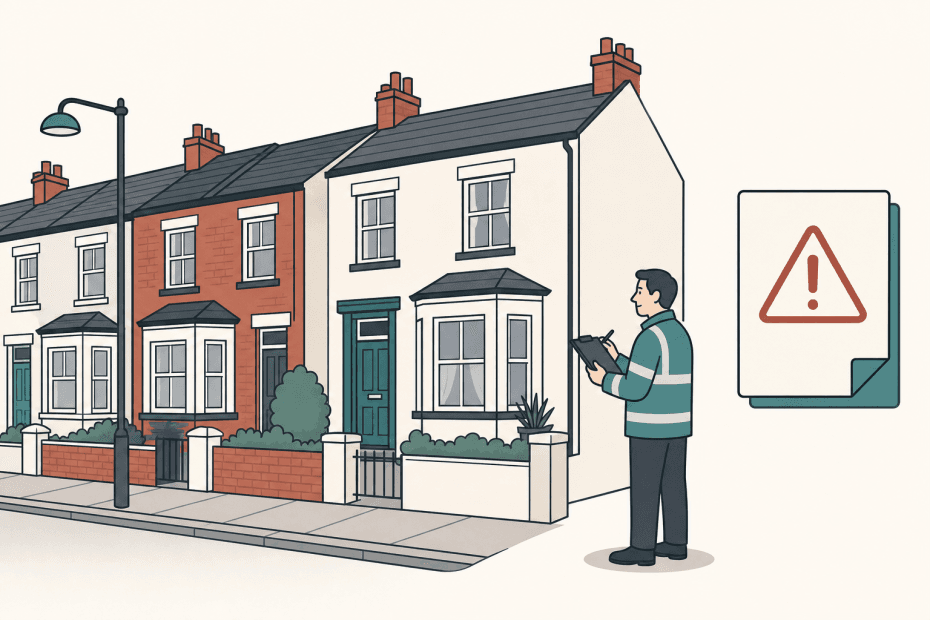
English councils are inspecting more private rented homes, but new figures suggest they are recovering only a small share of the financial penalties imposed for housing offences. For responsible landlords, the concern is not that enforcement is increasing. It is that inconsistent follow-through can leave compliant operators carrying more of the cost while the worst offenders avoid payment.
Freedom of Information data obtained by the National Residential Landlords Association (NRLA) indicates that councils completed 91,620 inspections under the Housing Health and Safety Rating System across 2023/24 and 2024/25. That compares with 85,326 across the previous two financial years.
However, earlier NRLA data covering 285 English councils found that almost £30 million in financial penalties was issued during 2023/24 and 2024/25, while only about £7.5 million was recovered. In other words, the reported collection rate was around one quarter.
Why the collection gap matters
Financial penalties are intended to give councils a practical way to deal with housing offences without relying entirely on criminal prosecutions. If penalties are imposed but not collected, they provide less deterrence and recover less money to support future enforcement.
The NRLA argues that licensing and other fees paid by compliant landlords can then end up subsidising action against the rogue minority. Whether every council faces the same difficulty is unclear from the headline figures, but the gap between penalties issued and money recovered raises legitimate questions about capacity, appeals, debt recovery and transparency.
The issue also affects tenants. A strong enforcement system should identify hazards early, require improvement and pursue landlords who ignore their responsibilities. Inspection totals alone do not show whether unsafe conditions were resolved or sanctions were effective.
More inspections do not change landlords’ core duties
The figures should not be read as a reason for landlords to expect an inspection or as evidence that every council will take the same approach. Local authority priorities and resources vary, and enforcement usually depends on the facts of the property and the particular legal power being used.
They are nevertheless a useful reminder to keep property condition and compliance records in order. The Housing Health and Safety Rating System covers a broad range of possible hazards, including excess cold, damp and mould, fire risks, electrical hazards, falls and sanitation problems.
Landlords can revisit our overview of housing hazard warning signs for practical context. Our report on a Rotherham landlord fine also shows how several unresolved safety and licensing issues can combine in a real enforcement case.
What a sensible compliance file should show
A well-organised file will not prevent every disagreement, but it can make it easier to demonstrate what was checked, when a problem was reported and how it was handled. Useful records may include inspection notes, dated photographs, repair requests, contractor invoices, gas and electrical safety documents, alarm checks and correspondence with tenants.
Where a council contacts a landlord, deadlines and requested actions should be recorded immediately. A formal notice or penalty should not be ignored, even where the landlord believes it is mistaken. The correct response will depend on the document and its appeal rules, so professional advice may be appropriate.
Landlords using managing agents should also confirm who receives council correspondence, who keeps inspection records and how urgent hazards are escalated. Outsourcing day-to-day management does not make missing information or unclear responsibilities harmless.
Transparency is the next policy question
The cross-party Housing Select Committee has called for stronger oversight of local authority enforcement against rogue landlords. The NRLA supports annual council reports setting out private rented sector enforcement activity, including how income from licensing and related schemes is used.
Comparable reporting could help landlords and tenants distinguish between councils that issue large penalties, those that collect them, and those that secure actual improvements to homes. It could also expose where enforcement teams lack the resources or debt-recovery support needed to finish cases.
For now, the practical message is straightforward: inspection activity is rising, but the effectiveness of enforcement cannot be measured by visits or penalties alone. Compliant landlords should continue focusing on property standards, prompt repairs and clear evidence, while watching for further changes to council reporting and enforcement powers.
This article is general information and not legal advice.
Source: Property Industry Eye: Millions in landlord fines go unpaid, published 17 July 2026, reporting Freedom of Information figures obtained by the NRLA.
